Final report of the 11th BRICS Youth Summit reinforces commitment to multilateralism, inclusion, and social justice
The document was prepared by the Secretariat and the National Youth Council of Brazil. Among its highlights is the new Multilateral Memorandum of Understanding (MoU)
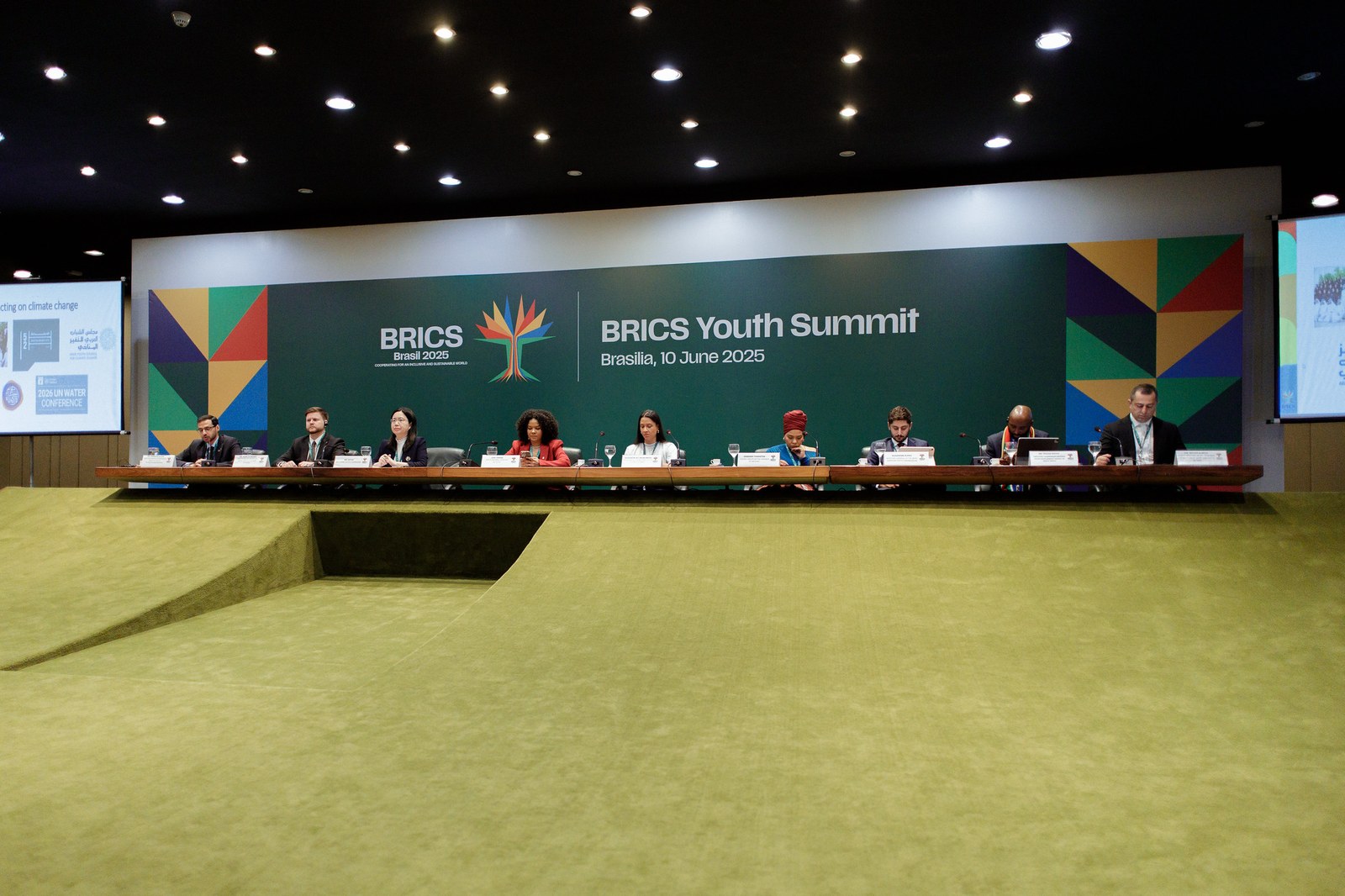
By the National Youth Secretariat of BRICS
Brazil’s National Youth Secretariat (SNJ), which is part of the General Secretariat of the Presidency of the Republic, and National Youth Council (CONJUVE) have concluded the report of the 11th BRICS Youth Summit. The document compiles the Summit’s main results and debates, organized by thematic axes. It also outlines proposals for joint action and presents the new institutional framework for cooperation on youth policies among member countries and partners of the bloc.
The concluding meeting of the youth delegation’s work reaffirmed the Brazilian BRICS Presidency’s commitment to strengthening multilateralism, inclusion, and social justice. It also underscored the group’s commitment to building a sustainable, multipolar world grounded in the social participation of young people. The meeting was held in Brasília in June 2025.
Guided by the motto Strengthening Global South Cooperation for More Inclusive and Sustainable Governance, the meeting established itself as one of the world’s leading youth cooperation platforms. It brought together official representatives from nine BRICS member countries (Brazil, China, Egypt, India, Indonesia, Iran, Russia, South Africa, and the United Arab Emirates), as well as partner countries such as Belarus, Bolivia, Cuba, Malaysia, and Nigeria.
Several meetings preceded the Summit, including regional seminars that brought together more than 2,000 young people and promoted social participation and youth engagement in diverse contexts. From among the participants, five young people—one from each region—were elected to join the Summit.
Results
One of the main deliverables of the Brazilian Presidency for the youth agenda was the signing, among the signatory countries, of a new Multilateral Memorandum of Understanding (MoU). The agreement seeks to strengthen governance instruments and consolidate an expanded cooperation platform focused on enhancing youth public policies, including social inclusion, innovation, exchange, sustainability, and democratic governance.
The MoU is formalized ten years after the establishment of the BRICS youth agenda at the Sixth Leaders’ Summit, held in Fortaleza (Brazil, 2014), and also ten years after the signing of the first memorandum on the subject at the 2015 ministerial meeting in Kazan (Russia). The new governance structure proposed in the Memorandum includes the institutionalization of the Biennial Ministerial Meeting, the Annual Technical Meeting, and the creation of the Executive Coordination Troika — composed of the current, previous, and incoming presidencies — to ensure continuity of the agenda.
The BRICS Youth Council, composed of government representatives and civil society, was consolidated, incorporated new members, and expanded its thematic areas. It now addresses crucial issues such as education, entrepreneurship, science, ecology, volunteering, sports, the fight against hunger, inequalities, and climate change.
With the new MoU, the BRICS Youth Council will be able to establish partnerships with civil society organizations and NGOs. This will facilitate collaboration with youth entities that see the BRICS agenda as an important space for cooperation and the exchange of best practices in youth public policies.